
Pioneering
MINISTRY
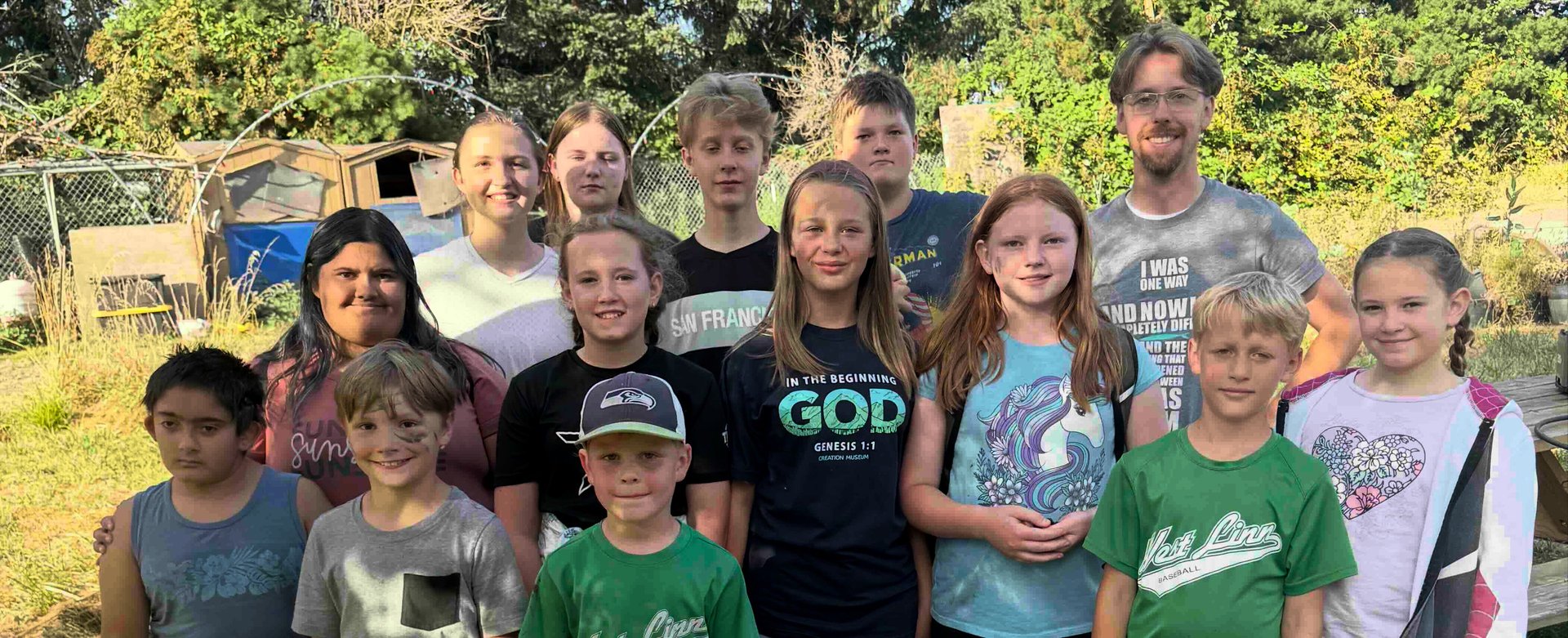
Tonight’s campfire night theme was ‘pioneering.’ It was going to be a bit smaller crew as some kids were out of town, but even so, we still had a solid group for the activity. As we packed up our supplies—matches, roastables, hammocks, water—we circled up and I jumped right in to explaining what we were doing.
“So guys, tonight we’ll be doing something where we’ll be splitting up. I need two groups.”
One of the leaders looked around. “It looks like there’s enough for a girls and a boys team,” Yup, there was.
“Great. So we need a leader on each team, because today we’ll be 'pioneering'. Who knows what pioneering is?”
One of the girls shared about how at a camp she once had to walk for miles in the steps of the pioneers and push a cart of supplies.
“Wow, yeah that’s a great example. We won’t have to go quite as far. You walked in the footsteps of pioneers who were blazing a path where no one else had gone yet. That’s what we’ll be doing, blazing new trails to the campfire area.”
Their responses indicated that the thought of trekking through thorny brush was, despite not necessarily pleasurable, an acceptable challenge.
I told each group where they would begin their trails: the girls on the left side of the forest (slightly closer) and the boys on the far right. I gave a few more instructions, and then we left.
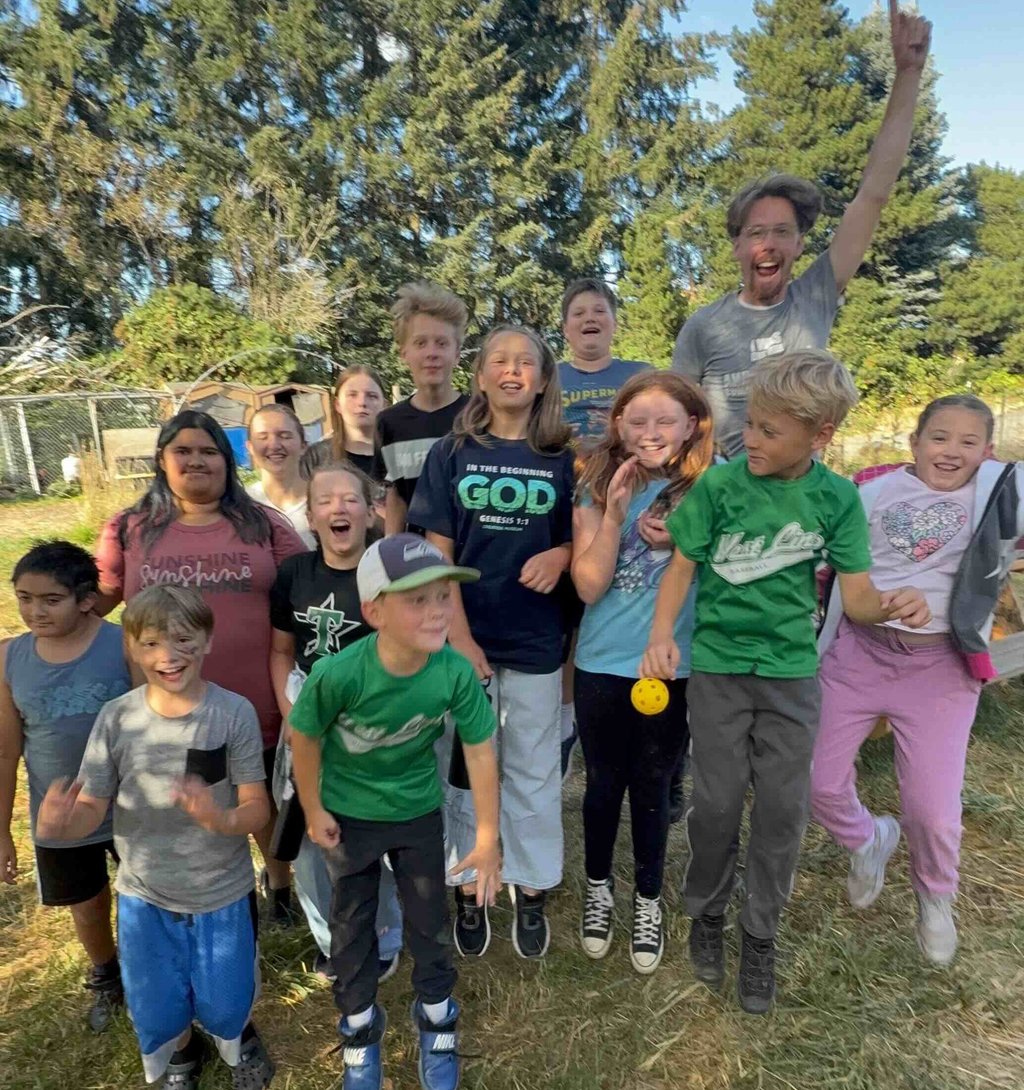
Last photo of the pioneers before departing
As we split into the two groups, the girls and leaders went left while I and the boys went right. We made it to the back to the field and, I in the rear, followed the boys who took a path already blazed by the tractor recently.
“At some point we’ll need to cut in and blaze a new trail,” I reminded the boys.
“This one’s pretty overgrown,” they pointed out, fighting through some nettles and weeds. The old creek path was indeed well overdue, having an entire season with fallen rotting trees and branches covering the path, possibly making it just as difficult to navigate as a new path through underbrush.
“Consider if anything might be helpful in pioneering a new path, like tools,” I said, cracking off a ‘scythe’ like branch to clear out nettles. “On the return trip, we’ll be taking the girls’ path and they’ll be taking ours, so make it good for them.”


Boys' overgrown path, pretty much trail blazing.
Eventually we made our way to the campfire spot. The girls had beaten the boys’ group there, and we shared our journeys, with some processing questions: What was it like to blaze a new trail, what strategies or tools made it more helpful, why was it difficult, and how does this apply to when someone does something new. Many of the questions about the immediate exprience were easily answered, but application questions connecting to other contexts seem to sometimes slow down the gears a bit. I love experiential processing, as it builds an amazing bridge between the hypothetical and abstract, which often, lessons from the Bible can feel like for kids (and adults) until we go through something directly relatable. After the kids had some free forest hang out time, retrieved the water from the creek and we got the roasting ingredients all laid out, we started our Bible study time.
“What are some examples of people who pioneered in the Bible?” I began.
Jesus, who ‘made a way’ for salvation and heaven, was the first response. “Yup, great example. Who else?”
Paul, who went on missionary journeys. Moses, who led the Israelites through the wilderness. The Israelites, who went into the promised land. All great examples.
“Yes, Moses had likely gone to the desert as a shepherd before leading the Israelites, and God himself led through through the desert and to the promised land. And as the Israelites were blazing a new path, they had enemies. I want to read you guys something from Numbers 24, which is a great example of some pioneering principles. As I read, tell me the name of the person we’re reading about:”
I began reading the story of the man who rode his donkey (“Nope, not Jesus”) on the way to curse Israel (“Yes, Balaam, and king Balak. Two ‘B’ names.”). When doing something new and of God, we noticed a few things from scripture:
1 - We will have enemies. King Balak saw Israel as a threat, and wanted to ‘take them out.’ He hired opposition to try and get the upper hand.
2 - The upper hand's is always God's. Balaam was only able to do God’s will, which was bless, not curse.
3 - We can't be cursed to fail, but we can be tempted out of complete success. Although unable to curse, Balaam advised Balak to use seduction to get the Israelites to sin and turn away from God. Through immorality and idol worship brought about by the introduction of Moabite women into the camp, a plague broke out against them as a consequence of their own choices.
“When you’re doing something new, whether going to a new school, making new friends, moving to a new area, or starting up a new ministry, you will have pushback. Know that somebody has likely gone ahead of you and is able to help you with it. The enemy desires to steal kill and destroy, and he can tempt you to sin, but know that you cannot be cursed. Be on your guard, use tools to help you on the journey to make it easier, and ask for help for those who have gone before.”
We prayed, roasted smores and hot dogs, packed up, and split up back through the now blazed trails, to meet back at the playground to conclude another campfire night.
Copeland Cloud © 2026